
THE BLIND SPOT IS CALLED HUMAN
Everybody is trying to spot AI.
But are we still able to recognise the human?
By United Partners — AI-native PR, Public Affairs & Trust Engineering Consultancy Based in Barcelona & Sofia, operating across Europe through the United Partners Network
Everybody wants an AI detector. Platforms want labels, schools want classifiers, brands want rules, audiences want certainty. But a recent internet experiment revealed a more uncomfortable question, what if the deeper problem is that we are losing the ability to recognise human intelligence when it appears in front of us?
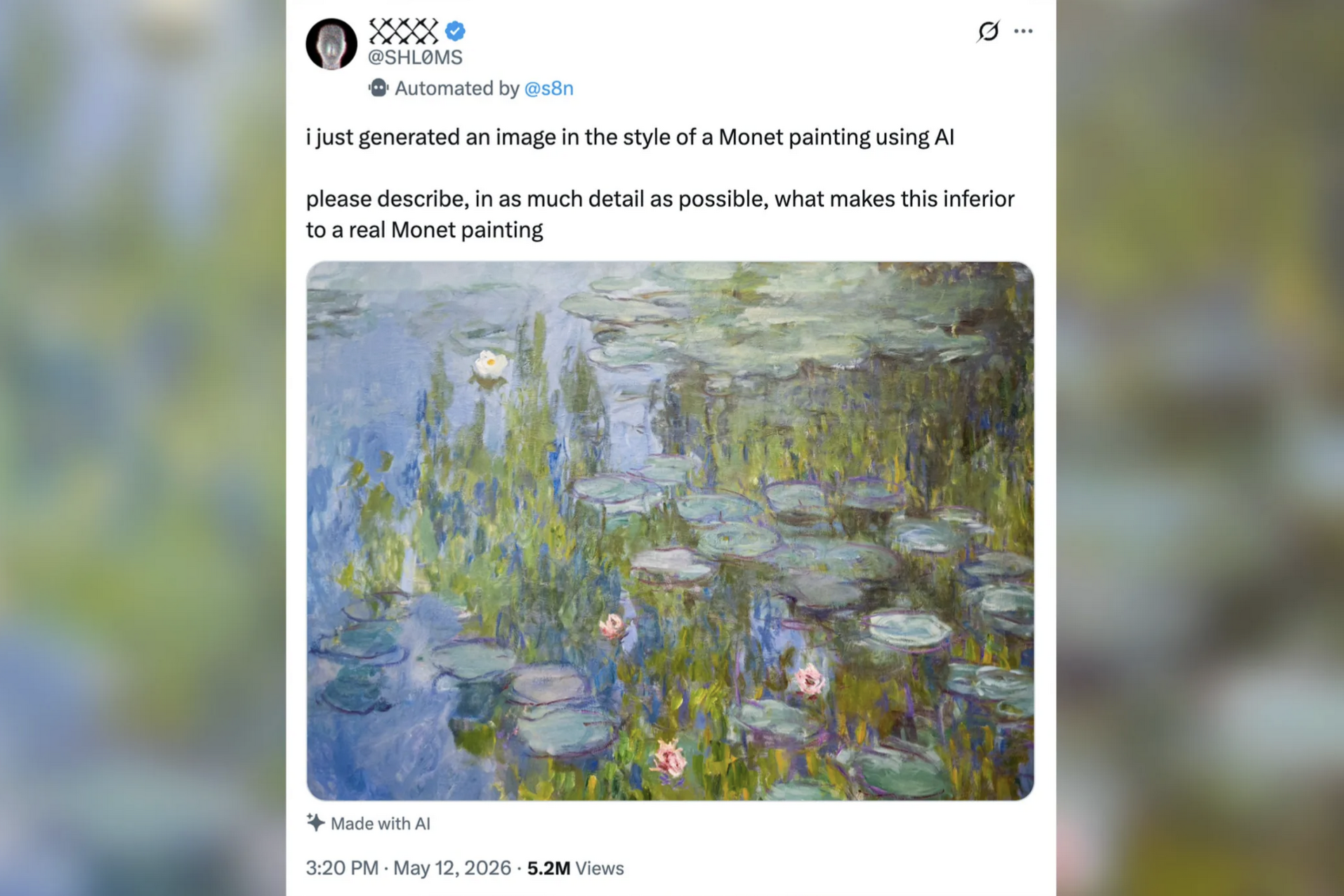
Screenshot via X
In May 2026, the anonymous artist SHL0MS posted a cropped image on X, claimed it was AI “in the style of Monet”, and asked people to explain why it was inferior to a real Monet. [1] Thousands obliged “incoherent”, “soulless”, “obvious AI slop”. One user wrote a 700-word takedown. The post drew 6.7 million views. [2] The image was a real Monet – Water Lilies from 1915, held by the Neue Pinakothek in Munich. [1][3] The painting did not change. The label did. Only those who looked at the brushstrokes instead of the caption – painter Kendric Tonn, art historian A.V. Marraccini, saw it for what it was. [3]
We do not see first, we frame first. Told “AI”, we hunt for smoothness and emptiness, told “Monet”, we hunt for genius.
The bias is measurable. People rate the very same artwork lower when it is labelled AI. The label even changes how viewers literally perceive its colours and brightness. [13] And the “tells” the crowd found – muddy greens, chaos without composition – were the traces of a 75-year-old man with cataracts, dismantling the form he had mastered all his life. Here is the uncomfortable arithmetic, AI is the average of millions of images, perfectly normal, human genius is a deviation from the norm. Our detectors fail in both directions. The machine passes the test because it is flawlessly average. The human fails it because he isn’t.
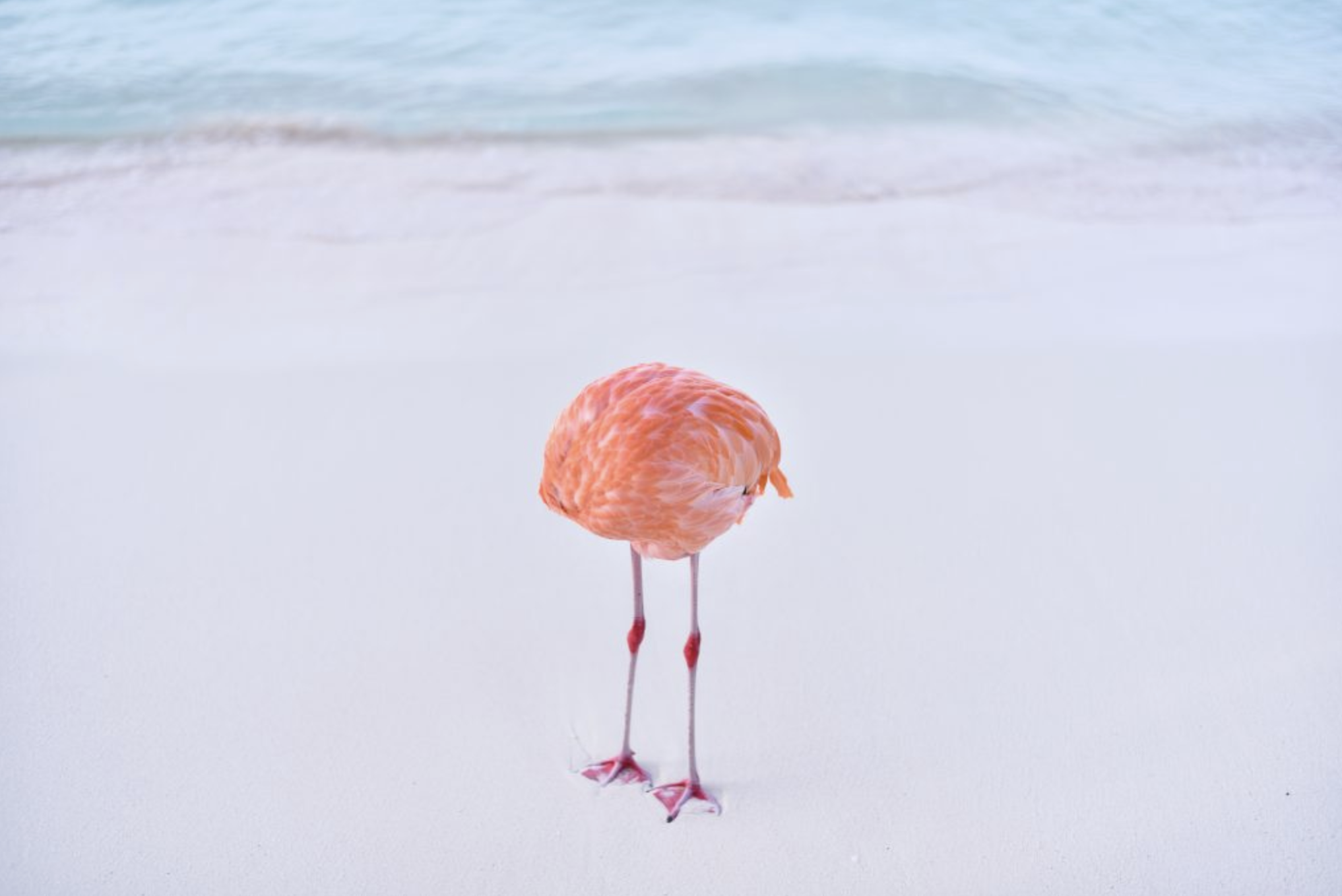
Miles Astray. FLAMINGONE (2024). Photo courtesy of Miles Astray
The mirrors are everywhere. A real flamingo photograph won an AI category at the 1839 Awards, then was disqualified for being real. [4]
Boris Eldagsen won a Sony World Photography Award with an AI image, then refused the prize. [5] An illustrator who spent 100 hours on a book cover was banned from r/Art for “looking like AI”. [6] Text detectors flagged the U.S. Constitution as AI-written. [7] OpenAI shut down its own classifier, it caught just 26% of machine text. [8] In one analysis, 78% of students accused of “writing with ChatGPT” were innocent, [9] essays by students with dyslexia or autism were flagged most often, [10][11] and Stanford found detectors misclassified 61% of human-written TOEFL essays. [14] A false AI accusation is not a technical error. It is a reputational injury. Meanwhile, a Nature study found people judge AI poems “more human” than those of great poets – “more human than human”. [12]
We do not just fail to detect the machine. We are failing to detect ourselves.
Because “Is this AI?” is rarely a technical question.
It is an emotional one, about respect, cheating, effort, taste, labour and manipulation. Authorship has become part of meaning. AI did not invent this, it exposed it.
It also changed the economics. When content becomes cheap, context becomes expensive. When output becomes infinite, source becomes important. When imitation becomes easy, intention becomes valuable. Origin systems like C2PA Content Credentials will show where content came from, [15] but a label cannot tell us whether work has taste, meaning, responsibility or emotional truth. We are building AI detectors. We also need human detectors, not witch-hunts, but the cultural skill of recognising intention, judgement, accountability and care.
For brands, transparency is not enough, framing is strategy. “Made with AI” without explanation sounds like “cheap”; hidden AI use, once exposed, sounds like “manipulative”. The answer is to explain the human role, who had the idea, what was not delegated, who is accountable. Transparency says, “AI was used.” Trust says, “here is how, why, where human judgement entered, and who stands behind the result.”
The real risk is synthetic certainty. Strong opinions built on weak evidence. In the AI era, audiences will misread real things as fake and accuse before checking, which makes verification part of reputation management. Check the image, the process, the source and the emotional meaning of the label before you react.
And the future will be hybrid, human ideas shaped with AI tools, AI outputs transformed by human judgement.
So, the better question is not “AI or human?” but, what was the intention, the contribution, the decision, the source, and can we trust the frame?
The most important detector may not be the one that finds the machine. It may be the one that still recognises the human.
* Made by the human team of United Partners – the idea, the arguments and the final judgement are ours. AI supported the research and the visual production. Тhe thinking was not delegated. Transparency says, AI was used. Trust says, here is how.
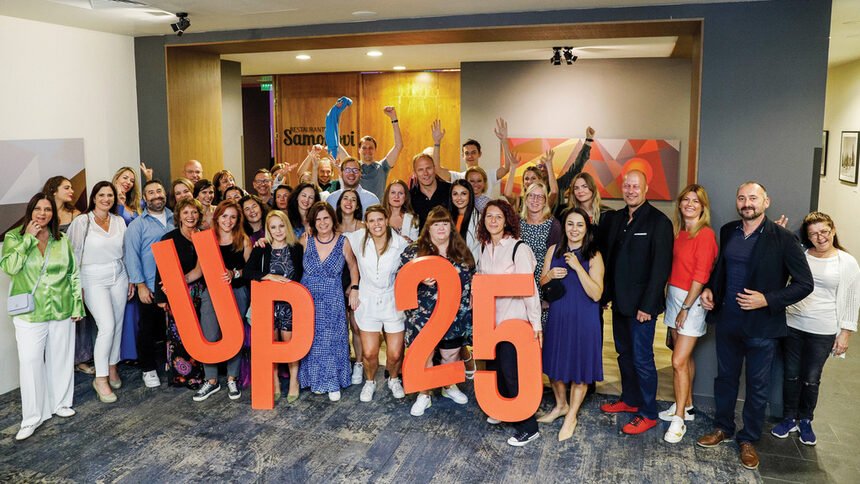
Our team at United Partners
At United Partners, we help brands build trust through strategic communications, AI transparency, executive thought leadership, and reputation management. Whether you’re developing an AI policy, strengthening your brand narrative, or preparing for AI Visibility, we help ensure both people and AI systems understand your organization accurately.
Ready to build trust in the age of AI?